School Magnet
In This School, We Are Trauma-Sensitive
At the Attachment & Trauma Network, we empower families, communities, and schools.
In this school, we are trauma-sensitive.
ATN views being trauma-sensitive not as a step to becoming trauma-informed but as a deeper integration of trauma-informed principles. Learning about trauma-informed care starts as a cognitive activity focused on understanding trauma, what it is, where it comes from, and how it impacts learning. We know that many of us struggle when responding to trauma-based behaviors, which can increase our own stress. Self-care and community wellness are often underemphasized until individuals face the challenges of applying trauma-informed practices daily.
As we deepen our trauma-informed practices, they become internalized and begin to influence our own neurobiology. We develop the ability to see behavior as communication and pause our own reactions, which enables us to respond with empathy and compassion rather than reacting. This paradigm shift enables a deeper understanding of how behaviors signal internal states and attempts to cope with toxic stress and past adversities. This is becoming trauma-sensitive.
Being trauma-sensitive involves whole-brain responses, a commitment to healing-centered solutions, and a growing awareness of how trauma-informed practices benefit everyone.
We create safe spaces, expectations, and routines.
Students must feel safe throughout the school—from the bus stop to the playground. Creating a sense of safety is crucial for students impacted by trauma, as early trauma can alter brain development. Educators can foster safety by:
- Demonstrating safe behaviors in physical, emotional, and verbal interactions.
- Avoiding sarcasm and yelling.
- Announcing transitions in advance.
- Establishing predictable routines and maintaining consistency.
- Setting and maintaining healthy boundaries.
- Identifying and removing potential triggers and developing safety plans. A trauma-sensitive classroom strikes a balance between being nurturing and maintaining clear expectations without being overly permissive or punitive.
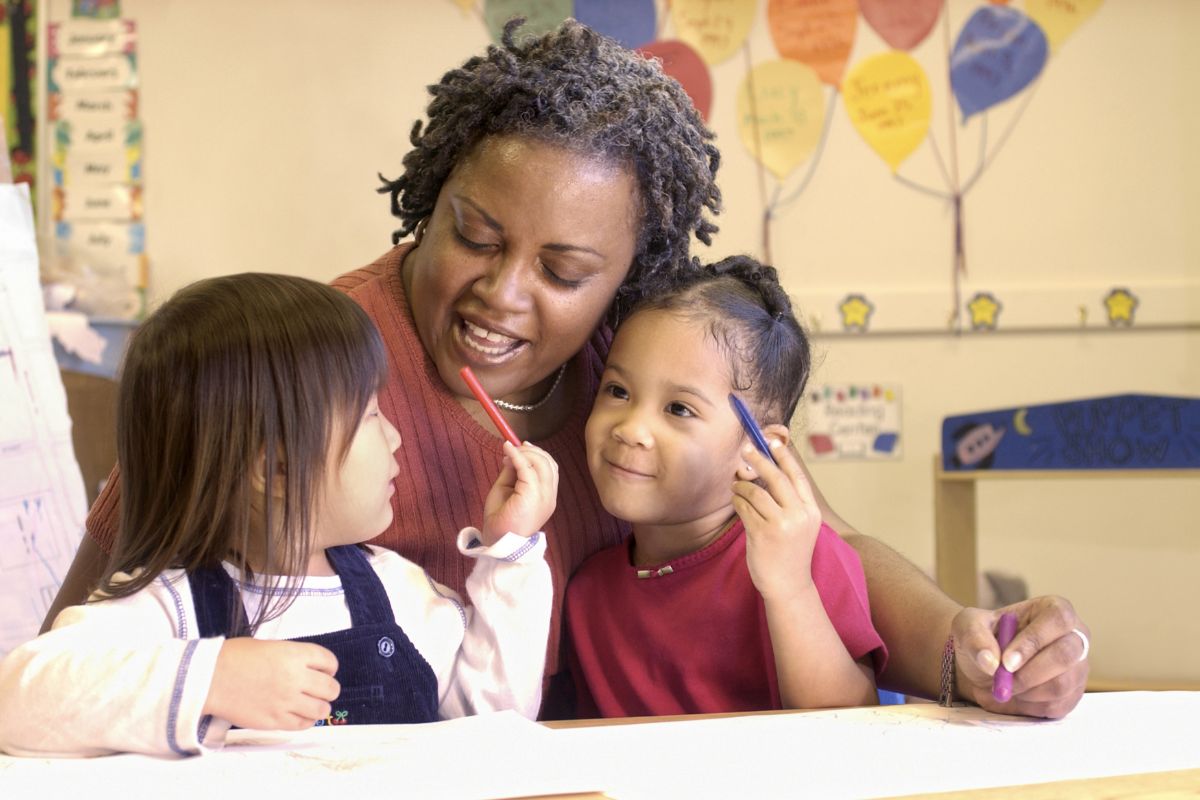
We connect with curiosity.
Trauma-sensitive educators maintain emotional connections with students by showing acceptance and empathy. When students display concerning behaviors, educators set limits while staying connected. Strategies for maintaining connection include:
- Prioritizing relationships.
- Being playful and lighthearted without using sarcasm.
- Approaching behaviors with curiosity to understand the underlying needs.
- Validating students’ feelings and demonstrating empathy.
- Using tools like re-dos to teach healthier behaviors.
We understand behavior is communication.
All behavior is communication, and educators must seek to understand the message behind it. Dr. Ross Greene tells us that children only exhibit these behaviors when the expectations placed on them outstrip their skills to communicate in other ways. Trauma-sensitive educators approach behavior with compassion and curiosity rather than judgment, asking themselves what the student is trying to convey. By identifying stressors—both for ourselves and our students—observing patterns, and uncovering underlying needs, we can move beyond addressing surface behavior. This approach enables us to provide meaningful support, build trust, and help students develop the skills they need to communicate and problem-solve.
We co-regulate and model self-regulation.
Trauma-sensitive educators understand that students’ brains often need co-regulation before they can self-regulate. To support regulation, educators can:
- Remain physically and emotionally present and attuned to students’ emotional states.
- Hold space by pausing to respond rather than react.
- Reflect steadiness and safety that students can borrow and lean on.
- Move toward students when they are distressed rather than away from them.
- Use time-ins instead of timeouts unless a student requests and benefits from solitude.
- Actively teach and model self-regulation techniques, such as deep breathing, mindfulness, grounding, and sensory breaks.
- Provide sensory tools and regulation kits in classrooms.
We respond with compassion when students “flip their lid.”
When a student, or anyone, experiences a fight, flight or freeze response, they may have ‘flipped their lid,’ meaning the emotional part of their brain has taken over, preventing access to the rational thinking part of the brain, the prefrontal cortex.
Educators respond with compassion by:
- Pausing and checking in with our emotions, making sure we are regulated, before intervening.
- Using a soft tone and slow cadence of voice and getting on their eye level.
- Validating students’ emotions.
- Keeping instructions simple and clear.
- Maintaining flexibility and adapting plans as needed.
- Modeling regulated behavior and apologizing when necessary.
- Waiting until the person is regulated and feels safe before discussing responsibility or what should have been done differently. Dr. Bruce Perry advises us to follow the sequence of regulate, relate, then reason as the person’s brain comes back “online”. It's important to remember that when anyone’s lid is flipped, they cannot process information and instructions, so interactions should be supportive and concise.
We HELP students make repair.
Trauma-sensitive classrooms handle difficult moments by prioritizing connection before correction. However, we also recognize that accountability and repair are important parts of restoring relationships.
When addressing challenges:

- Understand the difference between discipline, accountability, and punishment, and do not engage in punitive measures.
- Avoid power struggles.
- Model repair by acknowledging and learning from mistakes.
- Offer re-dos to give students a chance to try again.
- Show empathy, as making mistakes is a part of being human.
- Guide students through restorative actions to repair harm. Restorative practices focus on healing, accountability, and growth, not punishment. By fostering connection and support, we help students move beyond toxic shame and teach them how to repair and nurture relationships.
Caring for ourselves (and each other) is always a priority.
Teaching is inherently stressful, and working with traumatized students can lead to vicarious trauma. Self-care is not about indulging in temporary pleasures or venting frustrations. Instead, it involves nurturing your body, mind, and spirit through reflection and honest acknowledgment of your needs. Physically and emotionally healthy educators are better equipped to support students and sustain trauma-informed practices.
Community care moves beyond individual self-care to recognize that the health and success of individuals are deeply intertwined with the health of the school community as a whole. By fostering solidarity and interconnectedness, community care creates an environment where people actively support one another and work together to address shared challenges.
Both are an essential part of a trauma-sensitive school environment because when individuals care for one another, they become stronger, more compassionate, and better equipped to face challenges. This is how we build resilience – individually and as a community.
Educators must prioritize their own well-being by:
- Engaging in activities that bring joy and relaxation and making time for laughter and affection.
- Setting boundaries when and where appropriate.
- Practicing mindfulness and self-compassion.
- Seeking support from colleagues.
- Prioritizing sleep and rest.
- Incorporating physical activity and brain breaks in the routine
- Knowing personal triggers and creating a self-care plan.
To practice community care:
- Listen without judgment to build understanding
- Offer help proactively
- Participate in acts of kindness and community initiatives
- Create safe spaces for open communication
- Share resources and include others in decision-making
- Recognize and celebrate contributions to foster positivity and motivation
We build instruction on students’ strengths…and empower their growth.
Learning happens in relationships. Only when students feel safe, connected, and regulated can they truly engage in learning. Even then, traumatized students may experience lagging executive function skills, language delays, and other learning challenges. To support learning, trauma-sensitive educators:
- Differentiate between “can’t” and “won’t” behaviors.
- Provide clear, concise instructions and minimize unnecessary talking.
- Build on students’ strengths.
- Be mindful of different learning styles and incorporate creative strategies.
- Honor all forms of communication.
- Use Bloom’s taxonomy to promote higher-order thinking. Trauma-sensitive instruction emphasizes growth, understanding, and compassion, ensuring that all students can thrive.
And we know...that learning happens in relationship.
Attachment is a fundamental human need. In the classroom, this means calm, compassionate teaching that fosters a genuine sense of belonging—what we call “holding safe space.” By consistently meeting children’s needs, we help them build secure attachments. This might involve teaching at a younger developmental level than their chronological age if that’s what the child needs. A trauma-informed teacher tunes into a child’s emotional state, allowing the child to feel seen and understood without needing to earn it. These students need connection and sensitive attunement, not just attention.
One caring adult has the power to transform a student’s life, providing the safety, connection, and support that every child needs to heal, grow, and thrive. As Dr. Susan Hopkins says, “YOU are the strategy.”